Best Attic Insulation for Cold Utah Winters and How to Choose
Choosing attic insulation for a Utah winter is less about which product wins on paper and more about which one performs in a climate that swings from single digit mornings in Heber City to triple digit afternoons in Provo. Material that suits a mild coastal home has no business along the Wasatch Front. What actually matters is depth, air sealing, and matching the installation method to how your attic is built.
Get those three right and the brand name printed on the bag becomes close to irrelevant. Get them wrong and you will be reminded of it every January, usually around the time the furnace stops keeping up.
How Cold Utah Winters Affect Attic Insulation Performance
Cold does not damage insulation directly. What it does is expose every weakness the installation already had. The greater the temperature difference between your living space and the attic, the faster heat moves through any gap, thin patch, or compressed section. Utah makes that gap enormous.
A seventy degree living room sitting beneath a fifteen degree attic creates powerful upward pressure, and warm air finds the path of least resistance every time. Add snow sitting on the roof and escaping heat begins melting it from underneath, which refreezes at the cold eaves and forms ice dams. That is an insulation problem wearing a roofing costume.
Recommended Attic Insulation R Value for Northern and Central Utah
R value measures resistance to heat flow. Higher numbers mean better performance, and cold climates need higher numbers. The Department of Energy recommends R-49 to R-60 for attics in the climate zones covering Utah, which is considerably more than many homes built before 2010 actually have.
Confirm requirements against the currently adopted Utah energy code before starting any project, since code editions change and higher elevation communities carry stricter expectations than the valley floor.
Blown In Attic Insulation vs Fiberglass Attic Insulation vs Spray Foam
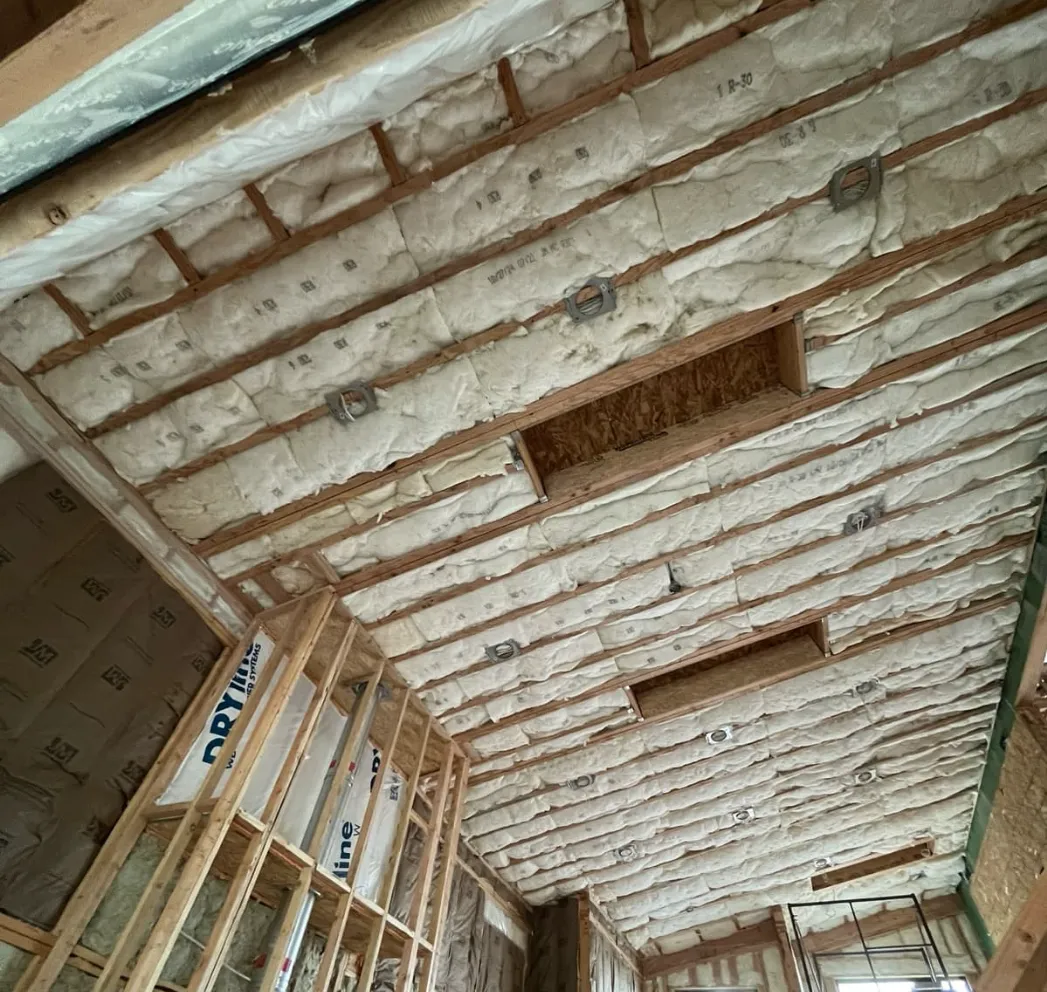
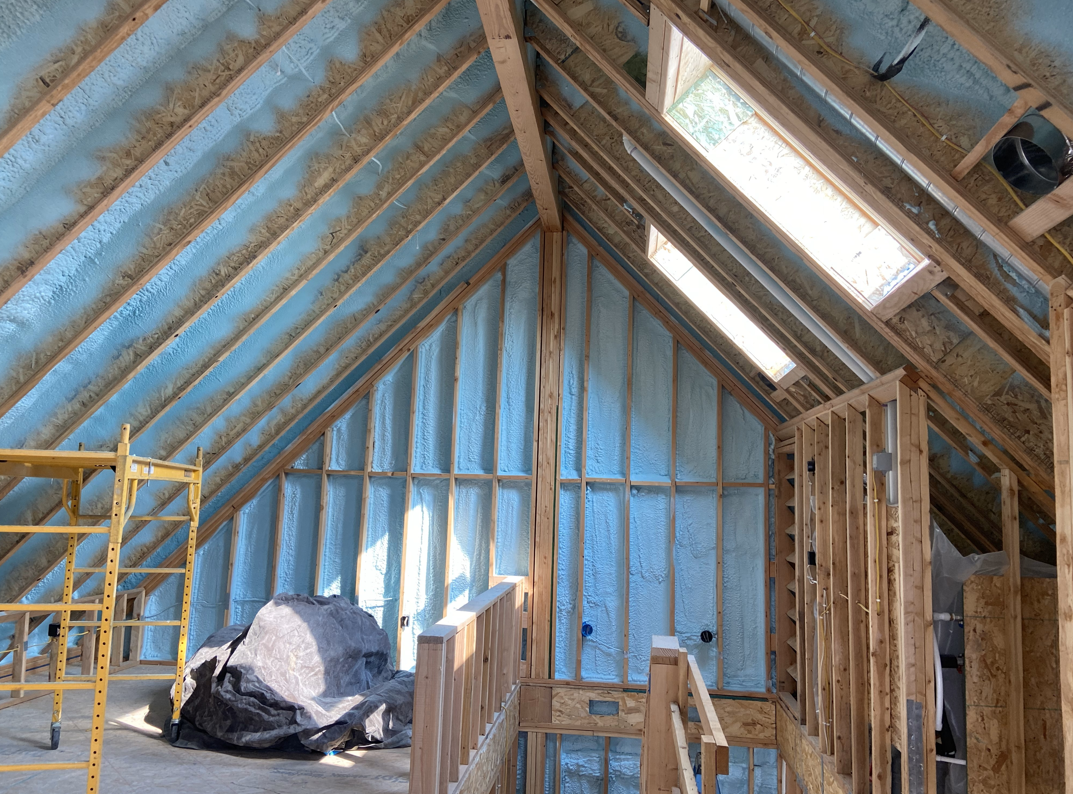
Each material earns its place in a different kind of attic. Blown in fiberglass or cellulose fills irregular spaces and flows around obstructions. Fiberglass batts suit clean, evenly spaced joist bays. Spray foam air seals as it insulates, which matters most where framing gets complicated.
These ranges reflect general industry pricing in the region and are offered for planning purposes only. Depth, attic access, framing complexity, and removal requirements all shift the final figure. Pricing is confirmed after an on site assessment, so treat any number found online as a starting point rather than a quote.
Factors That Determine the Best Attic Insulation for Your Property
Which question should you actually be asking? Not what is the best insulation, but what is the best insulation for this attic. The answer shifts based on:
Existing conditions. Dry and shallow means topping up. Wet or contaminated means removal first.
Attic access and framing. Tight, obstructed spaces favour blown in material over batts.
Air leakage. Recessed lights, hatches, and duct penetrations may need sealing before insulation goes anywhere near them.
Ventilation. Insulation without adequate airflow traps moisture and quietly creates a new problem.
Elevation. A home in Park City faces different demands than one in Santaquin.
Any contractor recommending a product before inspecting these is guessing.
What to Look for When Comparing Attic Insulation Contractors in Utah
Price alone makes a poor filter, because the cheapest bid often skips the steps that make insulation work. Before signing anything, ask:
Will you measure existing R value and depth, or estimate it from the hatch?
Does the quote include air sealing, or only material and labour?
How will you handle ventilation baffles at the eaves?
Is removal and disposal included if the existing material turns out to be contaminated?
Are you licensed and insured in Utah, and can you show proof?
A contractor who welcomes those questions is usually the one holding good answers. Vague replies about depth and R value tend to predict vague results.
Get an Attic Insulation Quote from Whitecap Enterprises in Pleasant Grove UT
Whitecap Enterprises installs attic insulation across Northern and Central Utah, and the assessment always comes before the recommendation. We measure what is actually up there, check for moisture and pest damage, look at ventilation and air sealing, then explain which option fits the building and why.
Sometimes that means blown in material. Sometimes it means addressing a roof leak before anything else happens. What it never means is a product chosen before someone climbed the ladder. Licensed, insured, family owned, and rated 4.8 stars by our Google reviewers.
If your attic has been underperforming through Utah winters, request a free attic insulation quote from Whitecap Enterprises.
Frequently Asked Questions
What R value do I need for an attic in Utah?
The Department of Energy recommends R-49 to R-60 for attics in the climate zones covering Utah. Higher elevation communities such as Park City and Heber City sit in a colder zone and benefit from the upper end of that range.
Is blown in or batt insulation better for a Utah attic?
Blown in generally performs better in existing attics because it fills irregular gaps and flows around obstructions. Batts work well in new construction with clean, uniform joist bays. Attic condition decides this more than material preference.
Does spray foam make sense for an attic?
It can, particularly where air sealing is the primary problem or the framing is complex. Closed cell delivers the highest R value per inch. The cost is higher, so it suits situations where conventional insulation cannot solve the issue.
How much does attic insulation cost in Northern Utah?
Industry pricing ranges roughly from $0.90 per square foot for batts to $7.00 per square foot for closed cell spray foam. Attic size, access, and existing conditions determine the actual figure, which is confirmed after assessment.
Can attic insulation prevent ice dams?
Correct insulation combined with proper ventilation is the standard approach. Ice dams form when escaping heat melts roof snow that refreezes at colder eaves. Addressing insulation alone without ventilation often leaves the problem partially unsolved.
Whitecap Enterprises serves Pleasant Grove • Lehi • Mapleton • Park City • Alpine • Salt Lake City • South Jordan • Draper • Santaquin • Provo • Heber City • Saratoga Springs and neighboring communities across Northern and Central Utah.
