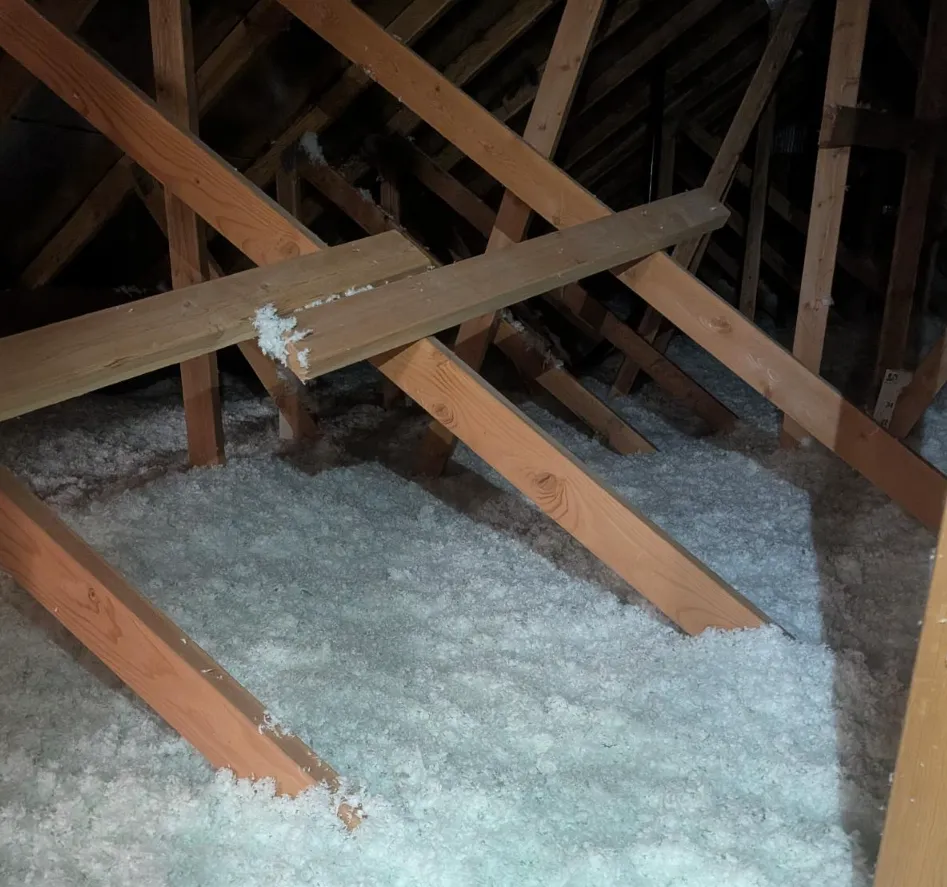
Can You Add Blown In Insulation Over Existing Insulation?
Adding blown in insulation over existing attic insulation is usually fine, and for most Utah County homes it is the faster and cheaper route to a warmer winter. The catch is that it only works when what is already up there is still doing its job.
Layering fresh material over wet, compressed, or rodent damaged insulation buries the problem instead of fixing it. The depth looks correct from the hatch, the utility bill does not improve, and the moisture quietly keeps working.
So the real question is not whether you can add blown in insulation. It is whether your existing attic insulation has earned the right to stay.
When You Can Layer Blown In Insulation Over Existing Material
Layering works when the existing material is dry, clean, and simply too shallow. That describes a large share of homes built before the current energy code took effect.
Blown in insulation has a practical advantage here. It flows over uneven surfaces and fills the gaps that settled batts leave behind, without anyone needing to pull up the old material first.
You can layer blown in cellulose or fiberglass over existing fiberglass batts, and over older blown in material of either type. The one rule that matters is that nothing with a vapor barrier facing goes on top, since trapping moisture between layers creates a problem you did not have before.
When Existing Attic Insulation Has to Come Out First
Some attics have to be cleared first. Burying any of the following is a waste of money:
Wet or water stained insulation, which signals an active or past roof leak
Rodent activity, including droppings, nesting material, or tunneling
Mold growth or a persistent musty smell
Insulation compressed flat by storage, foot traffic, or trades work
Material contaminated by smoke or sewer backup
Why does this matter so much? Because insulation only works when it is dry and full of air.
Wet insulation conducts heat rather than resisting it, and adding depth on top seals the moisture in instead of letting it dry out. Removal first, then new material.
How to Check What Is Already in Your Utah County Attic
Ten minutes with a flashlight and a tape measure answers most of this. Stay on the joists or a laid plank and never step between framing members.
Check three things. Measure depth in several spots, since settling is rarely even.
Look for bare patches near the eaves and around ductwork. Then check for dark staining or damp material, which points to a roof or ventilation issue.
Most Utah County attics sit in IECC climate zone 5B, where the Department of Energy recommends R-49 to R-60. If your insulation is level with the joists, you are well short of that.
Confirm the current requirement against the adopted Utah energy code before budgeting.
What Layering Blown In Insulation Costs and What Drives the Price
Cost depends almost entirely on whether removal is involved.
Scenario | Industry standard range |
Layering blown in over existing material | $1.00 to $2.50 per sq ft |
Removal of existing insulation | $1.00 to $2.50 per sq ft |
Removal plus new blown in install | $2.00 to $5.00 per sq ft |
Attic size, access difficulty, and target depth all move these figures. A tight attic hatch and a steep roof pitch cost more to work in than an open, walkable space.
These ranges reflect general industry pricing in the region rather than a quote. Final cost follows an on site assessment, which is the only way to know whether removal is required at all.
Questions to Ask Before Adding Blown In Attic Insulation
Price is a poor filter on its own, because the cheapest bid often skips the inspection that determines whether layering is even appropriate. Before signing anything, ask:
Will you measure existing depth and condition, or estimate from the hatch?
How do you check for moisture and pest damage?
Does the quote include air sealing around recessed lights and the attic hatch?
How will you keep insulation off the soffit vents and maintain airflow?
Is removal and disposal priced separately if the existing material turns out to be contaminated?
A contractor who welcomes those questions usually has good answers. Vague replies about depth tend to predict vague results.
Blown In Insulation Installation from Whitecap Enterprises in Utah County
Whitecap Enterprises installs blown in insulation throughout Utah County and the wider Wasatch Front, and the inspection always comes before the recommendation. We measure what is actually up there, check for moisture and rodent damage, then tell you whether layering will work or whether removal has to happen first.
Sometimes the answer saves you money. An attic that only needs more depth costs far less than one needing a full tear out, and you should know which one you have before anyone quotes the job.
Can you put blown in insulation over fiberglass batts?
Yes, provided the batts are dry, clean, and free of pest activity. Blown in material flows over and around settled batts, filling gaps they leave behind. Nothing with a vapor barrier facing should be layered on top.
How do I know if my old attic insulation needs removing?
Water staining, a musty smell, visible mold, rodent droppings or nesting, and insulation compressed flat are all reasons to remove rather than layer. Dry material that is simply too shallow can stay.
How much blown in insulation do I need to add?
Enough to reach the recommended depth for your climate zone. Most Utah County attics target R-49 to R-60, which existing settled insulation rarely reaches. Measuring current depth is the starting point.
Does adding insulation over old insulation cause moisture problems?
Only if a vapor barrier gets trapped between layers, or if the existing material is already damp. Loose fill over unfaced insulation in a properly ventilated attic does not trap moisture.
What does it cost to add blown in insulation in Utah County?
Industry pricing generally runs $1.00 to $2.50 per square foot for layering. Removal roughly doubles that. Attic size, access, and target depth determine the figure, confirmed after an assessment.
